
Email:
global@GCP-ClinPlus.com


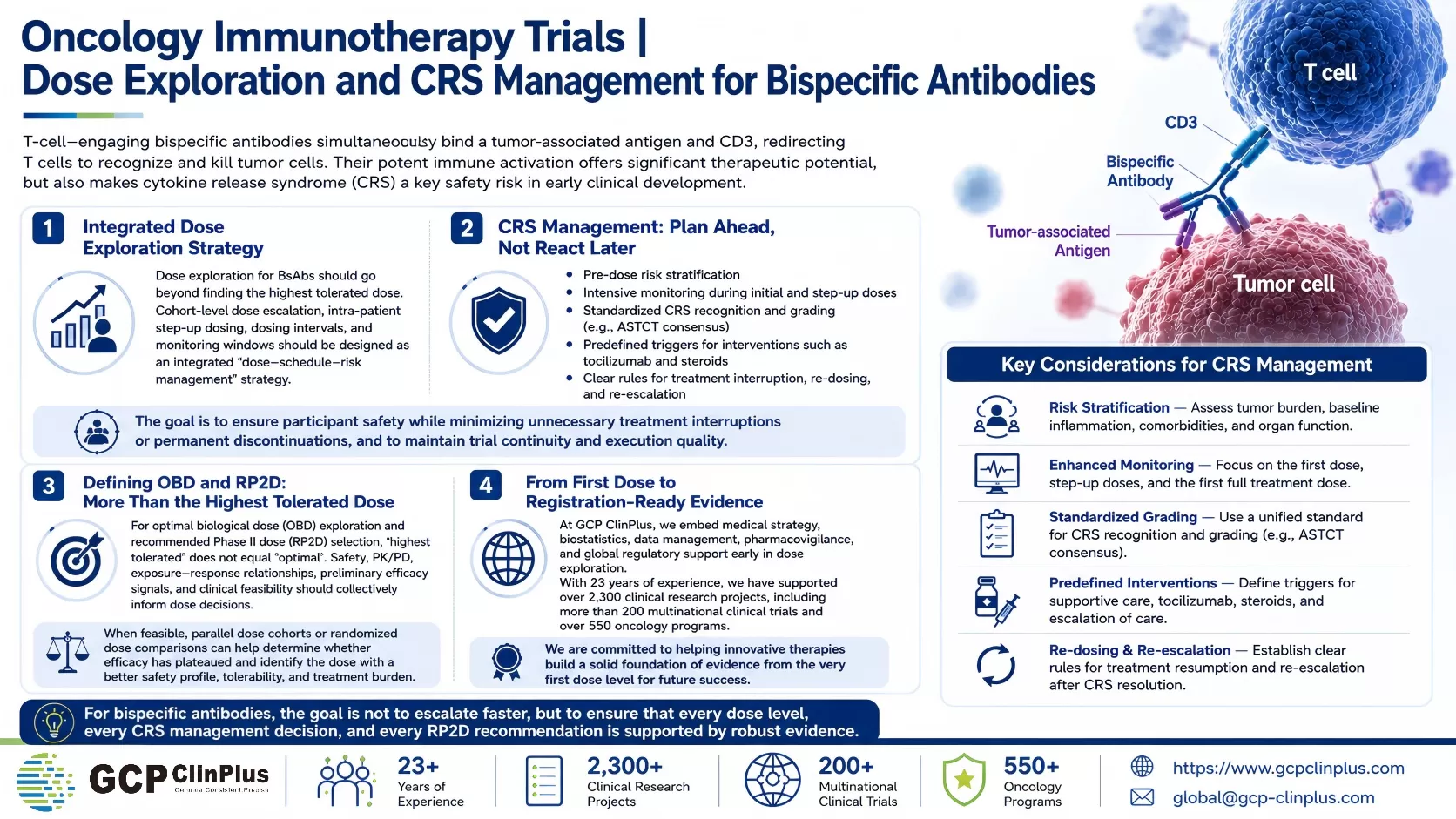
T-cell–engaging bispecific antibodies redirect T cells toward tumor cells by simultaneously binding a tumor-associated antigen and CD3. While this mechanism offers significant therapeutic potential, it also positions cytokine release syndrome (CRS) as a central safety challenge in early clinical development.
Dose finding for these agents should therefore address more than how high the dose can be escalated. Cohort-level dose escalation, intra-patient step-up dosing, dosing intervals, and monitoring windows should form an integrated dose–schedule–risk management strategy.
CRS management should also be built into the protocol from the outset, rather than treated as a reactive measure. Key considerations include:
▶ Risk stratification before dosing;
▶ Enhanced monitoring after the initial dose, step-up doses, and the first full treatment dose;
▶ Standardized CRS grading (e.g., per ASTCT criteria);
▶ Predefined intervention criteria for supportive care, tocilizumab, corticosteroids, and other measures;
▶ Clear rules for dose interruption, treatment resumption, and repeat step-up dosing.
The goal is to protect participants while minimizing unnecessary treatment interruptions or permanent discontinuations, thereby maintaining trial continuity and protocol integrity.
When exploring the optimal biological dose (OBD) and determining the recommended Phase II dose (RP2D), the highest tolerated dose is not necessarily the optimal dose. Rather, safety, PK/PD, exposure–response relationships, preliminary efficacy, and clinical feasibility should collectively inform dose selection.
Where appropriate, parallel dose cohorts or randomized dose comparisons can help determine whether efficacy has reached a plateau and identify a regimen with a more favorable balance of safety, tolerability, and treatment burden.
Based on this development logic, GCP ClinPlus brings medical strategy, clinical biostatistics services, clinical data management services, gcp pharmacovigilance, and global regulatory medical writing services into the early dose-exploration stage. With 23 years of industry experience, we have supported over 2,300 clinical research projects, encompassing 200+ multinational trials and 550+ oncology projects.
We are committed to helping innovative therapies establish a robust evidence foundation for registration, starting from the very first dose.
For bispecific antibodies, the goal of early development is not simply to escalate faster, but to ensure that every dose level, every CRS management decision, and every RP2D recommendation is supported by robust evidence.
https://www.gcpclinplus.com
global@gcp-clinplus.com
#Oncology #ImmunoOncology #BispecificAntibodies #ClinicalTrials #CRS #DoseEscalation #DoseOptimization #ClinicalDevelopment #GCPClinPlus