


Email:
global@GCP-ClinPlus.com

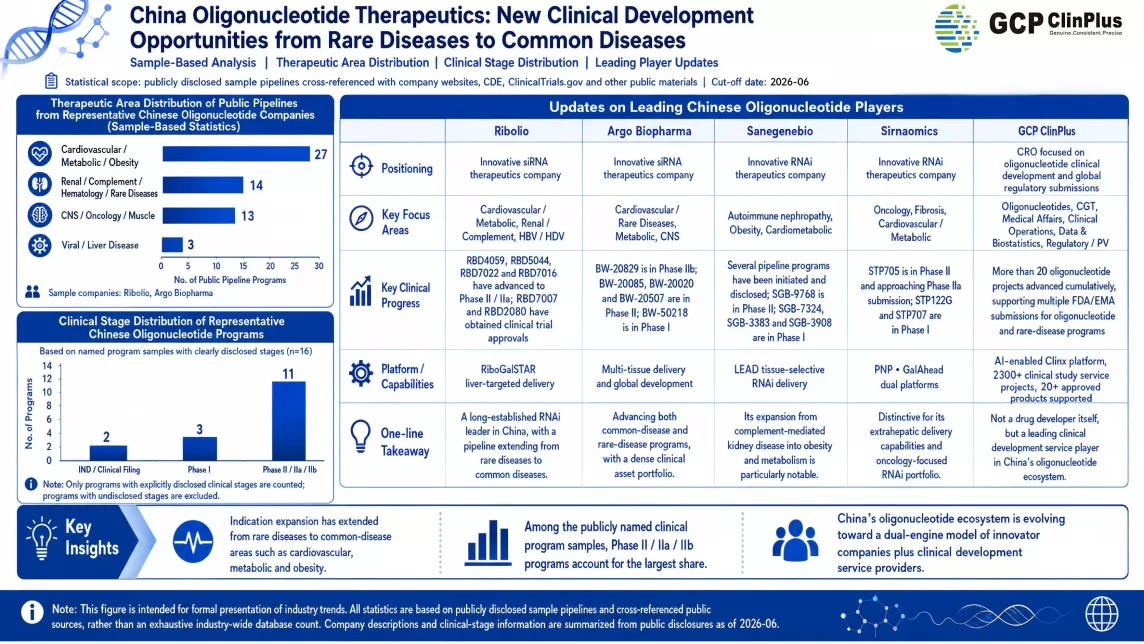
What started with rare and genetically defined diseases is now expanding rapidly into broader indications, including cardiovascular disease, metabolic disorders, obesity, complement-mediated kidney diseases, oncology, fibrosis and CNS disorders.
In China, the oligonucleotide therapeutics ecosystem is becoming increasingly dynamic. Innovative biotech companies are advancing siRNA and RNAi pipelines across both rare and common diseases, while specialized clinical development service providers are playing an increasingly important role in global clinical development, regulatory submissions and high-quality trial execution.
Based on publicly disclosed sample pipelines and named clinical-stage programs, several trends stand out:
1.Cardiovascular, metabolic and obesity-related indications are emerging as major expansion areas.
2.Phase II / IIa / IIb programs account for a meaningful share of named clinical-stage assets.
3.China’s ecosystem is evolving toward a dual-engine model: innovative drug developers + specialized clinical development partners.
4.Global regulatory strategy, clinical operations, biostatistics, medical affairs and data quality are becoming critical success factors for oligonucleotide programs.
At GCP ClinPlus, we support innovative therapies with integrated clinical development solutions across medical affairs, clinical operations, data management, biostatistics, regulatory support and pharmacovigilance. With experience in oligonucleotide, CGT and rare-disease programs, we are committed to helping partners move from clinical evidence generation to global regulatory milestones with quality, efficiency and regulatory confidence.
The next chapter of oligonucleotide therapeutics will not only be about scientific innovation — it will also be about execution excellence.